
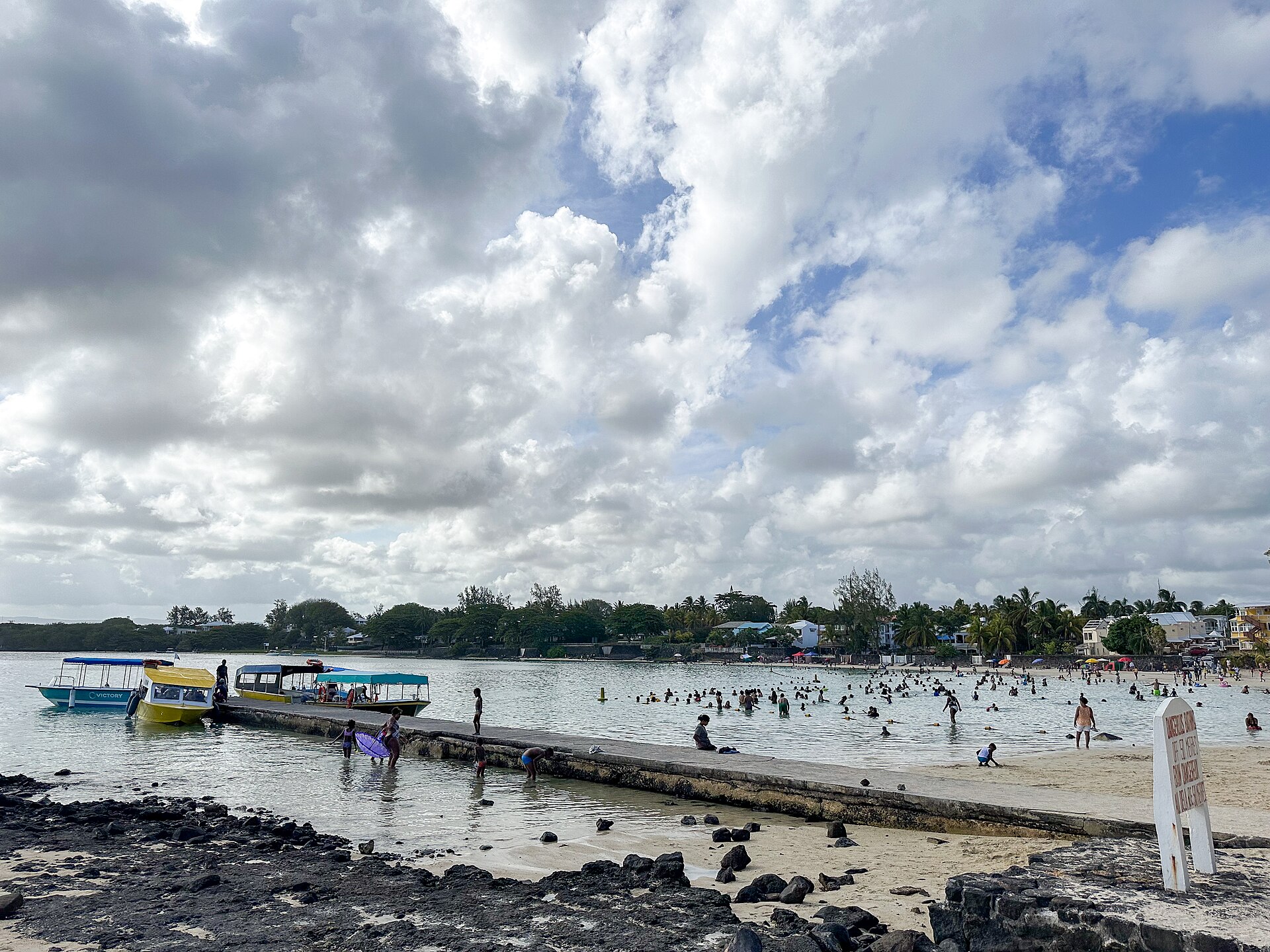
What to know before your visit
Yes, you can plan a worthwhile Blue Bay Marine Park visit without swimming. Choose an outing with confirmed glass-bottom viewing, rather than assuming a snorkelling boat offers it. Check that boarding suits you and that you may remain aboard throughout. Your companion can snorkel while you stay aboard only if the operator confirms that arrangement.
Make underwater viewing the purpose of your trip
For a non-swimmer, glass-bottom viewing should be the main activity, not an extra attached to a swimming excursion. Tell the operator that you want to observe through the glass and will not enter the water. This helps establish whether the proposed outing actually matches your visit.
The 2008 Ramsar record describes Blue Bay Marine Park as a 353-hectare site in Grand Port beside Blue Bay beach. It records coral, seagrass, mangrove and macroalgal habitats, with reef fish families including butterflyfish, damselfish, wrasses and parrotfish. These are historical records, not a current sightings list. Enjoy looking for different shapes, habitats and movement rather than expecting particular animals.
A viewing trip is not the same as a snorkelling transfer
Do not decide from the word “boat” alone. A vessel carrying snorkellers does not necessarily provide glass-bottom viewing, and the presence of glass does not tell you how much of the outing is devoted to using it. Ask what you will actually do while remaining aboard.
Use these distinctions to discuss the proposed trip. They are booking questions, not a claim that every format is currently offered.
| How the trip is described | What to confirm | Why it matters |
|---|---|---|
| Glass-bottom viewing | There is a usable viewing panel and time allocated to looking through it. | Underwater observation should be a planned activity. |
| Snorkelling boat or transfer | Whether glass-bottom viewing is included at all. | Transport to a snorkelling location is not the same experience. |
| Viewing with a snorkelling stop | You may stay aboard, with an agreed onboard arrangement. | Your dry visit should not depend on joining the swim. |
Glass, reflections and water clarity shape the view
Think of the glass as a viewing window, not a promise of clear underwater scenes. The condition of the panel, reflections across it and water clarity all affect what you can see. Views change with the light and water conditions. Choose the trip for the experience of exploring the reef, with room for those changes.
Before committing, ask what viewing conditions are like that day and how much of the proposed outing is intended for observation. Ask to see the viewing area if that is possible.
For photographs, try adjusting your angle to reduce reflected light, without blocking other passengers or leaning into an unsafe position. If reflections remain distracting, put the camera aside and concentrate on observing rather than forcing a picture.
Check the whole boarding process, not just the boat
A dry outing needs a workable route from shore to seat. Ask exactly where boarding happens, whether reaching the vessel involves stepping into water, and whether there are steps, gaps or changes in level. Do not assume a dry boarding arrangement from photographs of the boat already afloat.
Confirm the total outing time and how much is intended for glass-bottom viewing rather than travel or a snorkelling stop. Ask where you will sit and whether observing requires moving around.
Tell the operator you cannot swim. Ask about a suitable, correctly fitted life jacket and the safety briefing. A life jacket is an important precaution, not a replacement for swimming ability.
Accessibility depends on the individual vessel
“Suitable for non-swimmers” does not mean wheelchair-accessible or suitable for every mobility need. Access must be checked against the actual vessel and the boarding arrangement proposed for your departure.
Describe what you need in concrete terms: step-free access, a stable handhold, assistance with balance, or the ability to remain in your own wheelchair. Ask about boarding gaps, steps, doorway or passage widths where relevant, and whether the viewing panel can be seen from your seated position.
Also confirm how you would leave the vessel at the end. If a transfer is proposed, ask how it would work before agreeing. Do not assume that assistance, lifting arrangements, wheelchair storage or accessible seating will be available.
Agree on a plan if your companion wants to snorkel
A mixed group can plan different activities only when the operator confirms the arrangement. Say clearly that one person intends to snorkel and another will remain aboard for the entire stop.
Ask who remains on board, where you will sit, whether viewing continues during the stop and how long the stop is expected to last. Establish what happens if your companion decides not to enter the water. Do not assume that a snorkelling stop automatically includes a separate glass-bottom activity.
Your companion should respect their ability and conditions and swim with a buddy. You do not need to enter the water to keep the group together, and a snorkel does not make a non-swimmer safe.
Park rules still apply when you stay aboard
The published 2001 regulations specifically allow glass-bottom boats and boats transporting snorkellers or divers into Blue Bay strict conservation zone A for those activities, subject to schedules the authority may set. It would therefore be inaccurate to say that every strict conservation zone is closed to these visits.
Those regulations are a legal framework, not a live access map. Permits govern boats and commercial activity, while current signs and park instructions guide visitor actions. Swimming and snorkelling are prohibited in traffic lanes.
Keep the visit observational: do not feed marine animals, collect fauna or flora, damage natural features or leave rubbish. Staying out of the water does not remove your responsibility to protect the park.
Use this checklist before boarding
Save these points with your booking details and check any unresolved item before departure. The aim is a comfortable observation trip, not an outing that requires you to reconsider your decision to stay dry.
- The operator knows that you cannot swim and will not enter the water.
- Glass-bottom viewing is explicitly included, with its place in the itinerary explained.
- You understand the boarding route and any steps or water entry involved.
- Your seat and access to the viewing panel suit your needs.
- A suitable, correctly fitted life jacket has been addressed.
- Any companion’s snorkelling stop has a confirmed stay-aboard arrangement.
- You have heard the safety briefing and know whom to ask for help.
Plan your visit
Questions before you go
Can I take a glass-bottom trip if I cannot swim at all?
You can plan one without swimming, provided the operator confirms that you may remain aboard throughout and the boarding arrangement suits you. Explain your ability before booking, check the life-jacket arrangement and do not accept an itinerary that requires water entry.
Will I see turtles through the glass?
There is no sighting guarantee. The 2008 Ramsar record identifies green turtle habitat, but that historical record does not establish current abundance or where a turtle will be during your visit.
Is wearing a life jacket enough for me to try snorkelling?
No. Flotation does not replace swimming skill, and a snorkel does not make a non-swimmer safe. Keep your plan focused on viewing from aboard rather than treating equipment as a reason to enter the water beyond your ability.
Can children remain aboard without swimming?
Ask the operator to confirm the arrangement for your children and the particular vessel. Arrange close, attentive adult supervision throughout and suitable, correctly fitted life jackets. If an adult plans to snorkel, decide beforehand which responsible adult remains with the children.
What if I want to avoid boarding a boat too?
Consider a shore-based visit beside Blue Bay beach, which borders the park. Make the lagoon setting your focus rather than expecting underwater observation from shore. This avoids boat boarding, but it is a different experience from looking through a glass-bottom panel.