
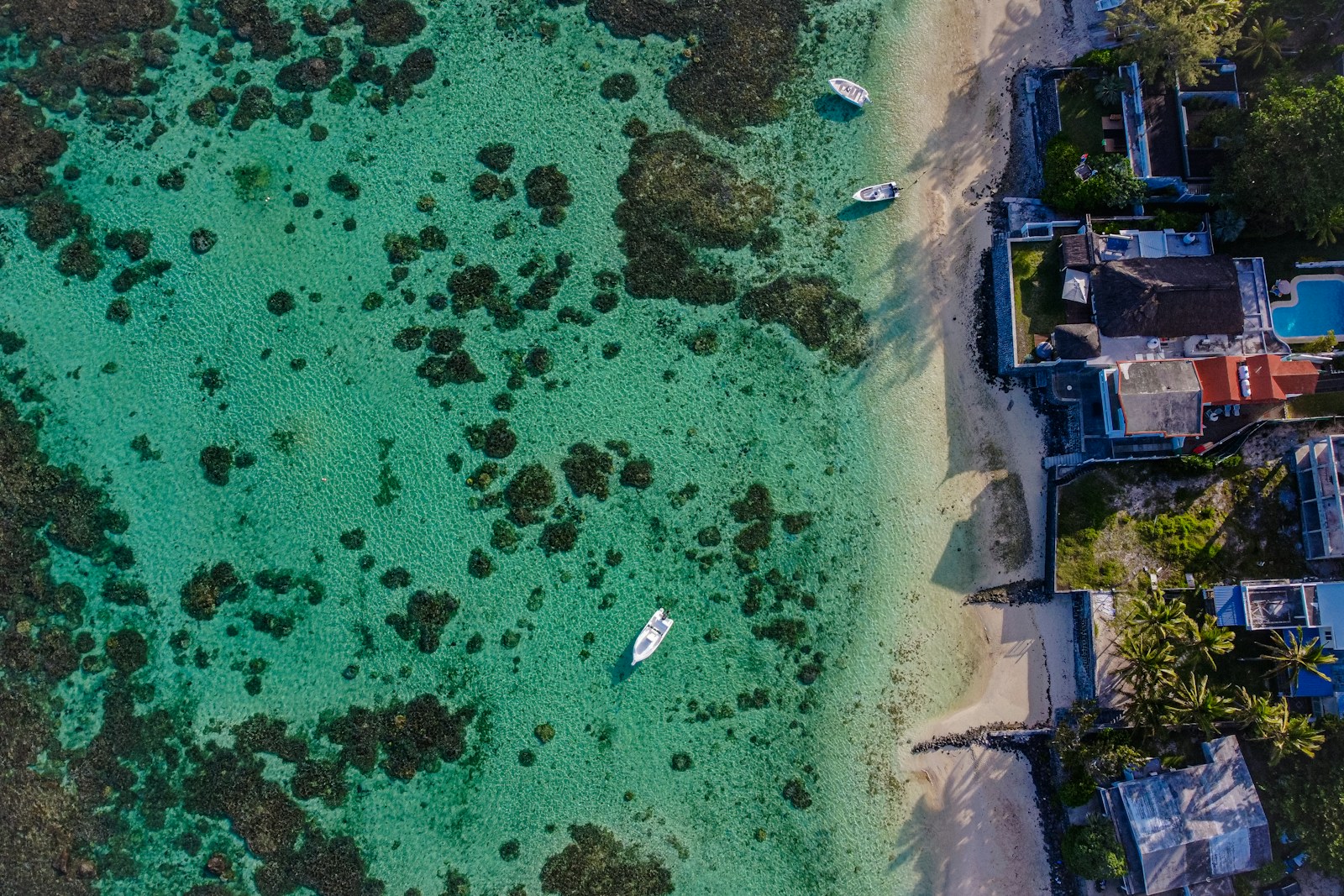
What to know before your visit
Protect Blue Bay’s reef by avoiding contact with coral and seagrass, never feeding wildlife or taking natural material, and following current park directions. Do not drop an anchor yourself. Ramsar recognition and reported restoration work are important, but neither establishes the reef’s present condition.
Blue Bay’s protection developed in three stages
Blue Bay was proclaimed a marine park in October 1997, designated a marine protected area in June 2000 and recognised as a Ramsar site in January 2008. The protected area covers 353 hectares in Grand Port, beside Blue Bay beach.
Ramsar recognition identifies Blue Bay as a wetland of international importance. It is not a UNESCO World Heritage designation. That distinction matters when reading descriptions of the park: international recognition explains its conservation significance, not whether every coral patch is healthy today.
Use these dates to understand the park’s protection history. For your visit, the more practical question is how to enjoy its habitats without disturbing them.
Protect the habitat network, not just the coral
The 2008 Ramsar dossier records coral, seagrass, mangroves and macroalgae within Blue Bay Marine Park. It also records about 72 fish species. This is a historical site inventory, not a current census or a promise of what you will see.
Seagrass and mangroves provide feeding and nursery functions. They deserve care even when the coral attracts most of your attention. The table pairs the historical evidence with practical visitor advice.
| Habitat | What the 2008 dossier records | A careful visitor’s approach |
|---|---|---|
| Coral | 38 coral species in 28 genera and 15 families. | Observe without touching, standing or resting equipment on coral. |
| Seagrass | Feeding and nursery habitat. | Avoid standing in it or dragging fins through it. |
| Mangroves | Feeding and nursery habitat. | Leave the plants and their surroundings undisturbed. |
| Macroalgae | One of the park’s recorded habitats. | Leave it in place rather than clearing a viewing spot. |
Keep your visit free of contact and feeding
The published regulations restrict or prohibit feeding marine fauna, taking fauna or flora, damaging natural features and leaving rubbish. A straightforward visitor approach is to watch animals without attracting them with food and leave everything natural where you find it.
Treat coral and seagrass as sensitive living habitat, not as a handhold or convenient place to stand. Before approaching coral, make sure you can float, turn and adjust your mask without reaching for the bottom. Keep fins and loose equipment clear, and leave enough room to change direction without contact.
If staying clear of the habitat is difficult, ask for guidance or consider a boat-based view. For photographs, move yourself into position rather than touching coral, moving an animal or offering food to bring fish closer.
Bleaching is not the same as coral death
NOAA explains that heat and other stress can cause corals to lose their symbiotic algae and become pale or white. This is coral bleaching. A bleached coral is not automatically dead: recovery can occur if the stress eases.
That explanation does not establish current conditions at Blue Bay. A visitor photograph alone cannot diagnose the health of the whole park. Equally, one colourful coral patch cannot demonstrate that every part of the reef is healthy.
When comparing reports or images, look for a date and a specific location. If you share your own observations, describe what you saw and when, rather than labelling the entire park dead, unaffected or fully recovered. This keeps useful observations separate from unsupported conclusions.
Read restoration reports with their dates attached
A Mauritius Environment Observatory project account reports that outplanting nursery-grown coral began in May 2025 at two Blue Bay sites, with a target of about 8,000 fragments. This is evidence of a dated restoration project, not confirmation that the target was completed.
It also does not establish that every planted fragment survived, that the entire reef has been restored or that conditions are uniformly healthy. Keep the project’s location, start date and target separate from claims about present reef condition.
For visitors, restoration is a reason to give conservation work space, not an invitation to handle coral. If staff identify a restoration area, follow their directions and leave fragments undisturbed. The published account does not establish a visitor coral-planting activity or a pay-to-plant scheme.
Follow current zoning instructions on the water
The official 2001 regulations provide the legal framework, not a live access map. They distinguish swimming, traffic, mooring, conservation and strict conservation zones. Swimming, snorkelling and diving are prohibited in traffic lanes.
The regulations describe the general swimming zone as demarcated by a line of yellow floats or buoys. That does not establish today’s buoy positions, so do not use a historical description to choose your route. Follow current signs and park instructions.
Strict conservation does not mean every such zone is closed to all visits. Blue Bay strict conservation zone A specifically allows glass-bottom boats and boats transporting snorkellers or divers for those activities, subject to schedules the authority may set. Ask which area is being used and where you may enter the water; do not infer permission from another boat’s presence.
Ask how a boat visit avoids damage
Permits govern boats and commercial activity under the regulations. For a practical conservation check, ask about the proposed visit rather than relying on an unsupported green label.
Useful questions include whether fish feeding is excluded, how guests are briefed to avoid contact, where water entry is allowed and how the boat will stop without damaging natural features. These are suggested questions, not a certification system or a guarantee of performance.
Leave mooring and anchoring decisions to the authorised crew, and do not drop an anchor yourself. If you are responsible for a boat, obtain current park mooring instructions before entering rather than choosing a stopping place from apparent gaps in the coral.
Prepare a simple low-impact visit
A little preparation makes these choices easier once you reach the water. Use this checklist before committing to a trip and again before entering the lagoon. It is practical advice, not a substitute for instructions given at the park.
- Choose a viewing activity that suits your confidence and ability to remain clear of the bottom.
- Agree within your group that nobody will feed fish, touch coral or collect natural material.
- Secure cameras and loose equipment so they do not trail into the habitat.
- Confirm the permitted water-entry area and how to return to the boat or shore.
- Plan to carry all rubbish back with you, including small wrappers.
- Keep the date and location with any photographs you later use to discuss reef condition.
Plan your visit
Questions before you go
Is Blue Bay’s Ramsar status a UNESCO World Heritage designation?
No. Its January 2008 Ramsar designation recognises a wetland of international importance. Ramsar recognition should not be described as UNESCO World Heritage status.
Can I join a coral-planting activity at Blue Bay?
The Environment Observatory’s project account describes nursery-grown coral outplanting that began in May 2025. It does not advertise a visitor planting programme. Enjoy the reef through permitted viewing activities, and verify any separately advertised conservation participation with the responsible project before booking.
Does white coral mean the reef is dead?
Not necessarily. Bleaching can make coral pale or white, but bleached coral may recover if stress eases. A photograph of one patch cannot establish the condition of the entire park.
Does the park’s conservation status guarantee turtle sightings?
No. The 2008 Ramsar dossier records green turtle habitat, not guaranteed sightings or current abundance. Plan to appreciate the habitats rather than making a particular animal encounter the measure of your visit.
Can I take a shell or a piece of dead coral?
The safest conservation choice is to leave both in place. Taking fauna or flora and damaging natural features are regulated; do not assume that something appearing dead creates a collection exception.