
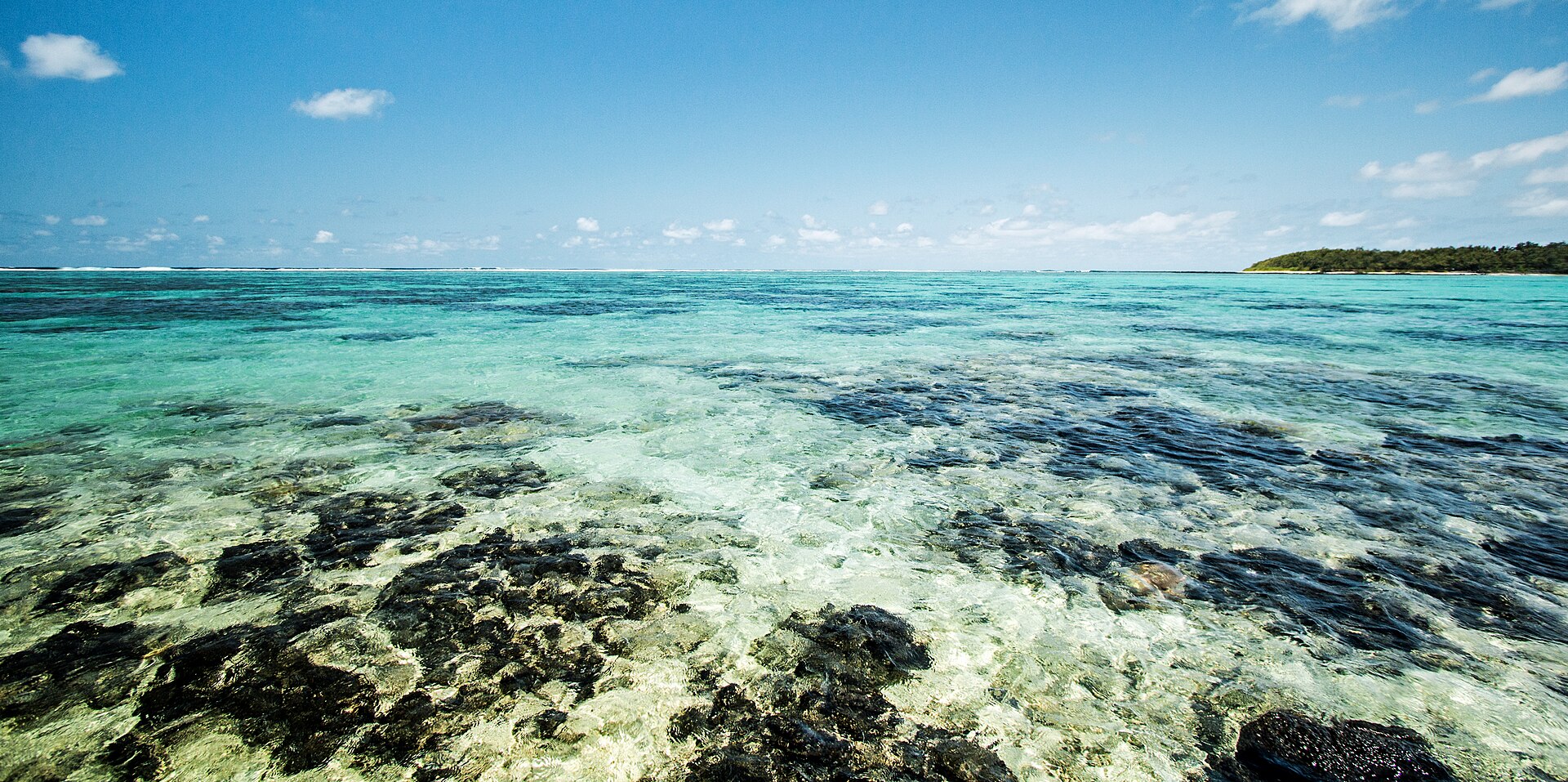
What to know before your visit
The fish families recorded at Blue Bay Marine Park include butterflyfish, damselfish, wrasses, parrotfish and surgeonfish. Start by noticing body shape, the mouth, fins and how a fish moves. A glass-bottom boat gives a dry introduction to the reef; a suitable snorkelling visit lets you watch at water level. Treat these families as a field guide, with sightings varying from one visit to another.
Start with five recognisable reef-fish groups
You do not need to memorise a species list before visiting Blue Bay. Learn a handful of broad shapes and you will have something useful to look for from your first view of the reef. Colour is an attractive clue, but it is only one clue. Different ages and closely related species can look surprisingly different.
The table is an introduction to families recorded in the park’s 2008 Ramsar information sheet. General identification features come from fish field references. It is not a list of fish guaranteed to pass your boat, and a family-level identification is often the most useful result of a short encounter.
| Group | A useful first clue | What to watch next |
|---|---|---|
| Butterflyfish | A deep body that looks narrow when the fish turns towards you. | Notice the outline and markings together rather than naming a fish from one colour. |
| Parrotfish | Many have teeth joined into a conspicuous beak-like mouth. | Watch the mouth and movement near the reef without moving closer to force a view. |
| Wrasses | Many have an elongated body and a long dorsal fin. | Follow the swimming pattern briefly; this is a very varied group. |
| Damselfish | A family recorded in Blue Bay’s historical inventory. | Note body shape and whether the individual stays near one feature; use a reference photo to narrow the identification. |
| Surgeonfish | A family named for the sharp spine or spines near the base of the tail. | Observe without handling. A close look at the tail is never a reason to approach or touch. |
Understand what the Blue Bay fish count means
The 2008 Ramsar information sheet recorded about 72 fish species alongside coral, seagrass, mangrove and macroalgal habitats. That gives valuable background to the park’s biodiversity. It is a dated inventory, rather than a current count or a checklist you should expect to complete during one outing.
A short visit only shows a small part of a much larger habitat. Some fish pass through your view quickly; others blend into the background or remain behind a coral formation. Allow time to watch one patch instead of measuring the success of the trip by a running total. Recognising three different body shapes and understanding how they use the reef can be more rewarding than collecting ten uncertain names.
Watch the relationship between fish and habitat
Look at the whole scene before following an individual fish. Blue Bay’s documented habitat mosaic includes living coral, seagrass and other coastal habitats, with feeding and nursery functions associated with seagrass and mangroves. The spaces between coral formations matter as well as the formations themselves.
For your own observations, compare what is happening over an open sandy patch with what you can see beside a coral structure. Notice whether fish move together, pause beside a feature or return to the same place. These are useful things to describe even when the species is unfamiliar. Seeing a fish beside coral does not, by itself, show that the fish eats coral. Keep the observation simple and let the behaviour unfold.
Choose a viewing method that suits you
A glass-bottom boat lets you explore the underwater setting while remaining aboard. It is a good format for a mixed group that wants to share the same reef visit without everyone entering the water. The view depends on the window, reflections, light and water clarity. Ask whether the outing is primarily glass-bottom viewing or a transfer to a snorkelling stop, because the two experiences can be very different.
For a comfortable swimmer, a suitable snorkelling outing provides a different perspective at water level. Choose it around ability, the day’s conditions and the briefing, rather than assuming it will produce more species. Agree where to enter and return, stay with your companion or guide, and give the fish room. A flotation aid does not turn a non-swimmer into a confident snorkeller.
Make a simple fish-spotting game for children
Choose observation tasks that do not depend on seeing a particular animal. Find a rounded fish and a long fish. Watch one that moves alone and another in a group. Compare a fish’s appearance when seen from the side with its outline when it turns. These small questions give children a reason to look carefully without promising a turtle or a particular colourful species.
On a glass-bottom boat, take turns describing what you can see rather than leaning across everyone else’s view. After the trip, draw a fish from memory and add its shape, markings and behaviour. If children enter the water, attentive adult supervision takes priority over identification games or photographs. Keep the session suited to their confidence and interest, and finish before the activity becomes tiring.
Use photographs as a record, not a reason to chase
A useful identification photograph shows the side of the fish, its fins and tail, and enough of the surroundings to give context. If you cannot obtain that view while remaining comfortably in place, enjoy the sighting and let the fish go. A blurred photograph is a better outcome than touching coral or following an animal into an unsuitable area.
Keep cameras and straps under control so they cannot trail over the reef. Record broad details afterwards, such as an oval body, a dark band near the eye or a beak-like mouth. When a reference does not match, leave the name open. Avoid assigning a Caribbean or Pacific species name to a Mauritius fish simply because an online picture has similar colours.
Keep fish watching passive
Do not feed fish to bring them closer or make them gather beneath the boat. Mauritius’s published marine protected area regulations restrict feeding marine fauna and taking or damaging wildlife. The most useful view is of animals behaving without a visitor creating the scene.
Keep clear of the reef, leave shells and other natural material in place, and follow the permitted activity area. A fish crossing a boat lane is not an invitation to follow it. Before the outing, agree on a few simple priorities so that the group can focus on observing once the reef comes into view.
- Choose the viewing format before comparing prices.
- Learn two or three body shapes instead of a long species list.
- Keep equipment, hands and feet clear of coral.
- Never feed, touch or chase fish.
- Follow the briefing and return plan.
- Use photographs and notes to check uncertain identifications afterwards.
Plan your visit
Questions before you go
What fish can I see at Blue Bay Marine Park?
The historical park inventory includes butterflyfish, damselfish, wrasses, parrotfish and surgeonfish, among other families. Use these as groups to look for rather than promised sightings. Conditions and the part of the reef visited shape each outing.
Does Blue Bay have 72 fish species today?
About 72 species were recorded in the 2008 Ramsar information sheet. The number is useful historical context, not a current census or the number you will see on a single trip.
Can I watch reef fish without snorkelling?
Yes. A glass-bottom viewing trip offers a dry way to explore the underwater setting. Confirm that glass-bottom viewing is part of the itinerary rather than assuming every boat trip provides it.
Should I bring food to attract fish?
No. Do not feed fish or choose an encounter that relies on feeding them. Observe naturally occurring activity and follow the marine park’s rules.
How can I identify a fish after my visit?
Use a photograph or notes showing the body shape, mouth, fins, tail and markings. Check a reference appropriate to Mauritius and the Indian Ocean. If the details do not match clearly, keep the identification at family level.
Go to the source
- Ramsar information sheet for Blue Bay Marine Park (2008)
- NOAA marine wildlife viewing principles
- Marine protected area regulations
- NOAA tropical reef fish identification reference
- National Museum of Nature and Science parrotfish family reference
- Florida Museum surgeonfish anatomical reference
- American Red Cross water safety guidance